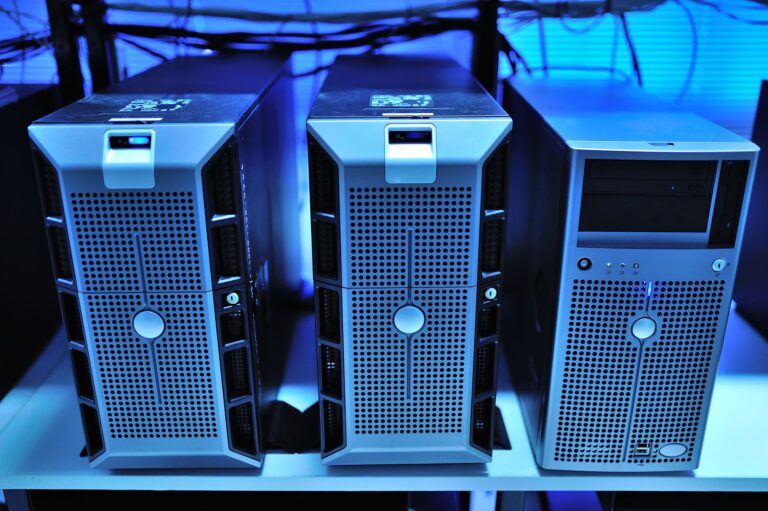
Data Centre Uptime and High Availability
Introduction to Data Centre Uptime and High Availability
Data centres are the backbone of modern computing, providing the infrastructure for businesses and organizations to store, process, and distribute data. Ensuring high uptime and availability is crucial for data centres, as downtime can result in significant financial losses and damage to reputation. In this article, we will delve into the technical aspects of data centre design, focusing on advanced real-time monitoring systems and server redundancy configurations.
Real-Time Monitoring Systems
Real-time monitoring systems are critical for data centres, as they enable administrators to quickly identify and respond to issues before they become critical. A comprehensive monitoring system should include the following components:
- Temperature and humidity monitoring: Data centres require a stable temperature and humidity environment to operate efficiently. Monitoring systems should be able to track temperature and humidity levels in real-time, alerting administrators to any deviations from the optimal range.
- Power monitoring: Power outages can be devastating for data centres. Real-time monitoring systems should be able to track power usage, voltage, and frequency, enabling administrators to identify potential issues before they occur.
- Network monitoring: Network monitoring is critical for data centres, as it enables administrators to track network performance, identify bottlenecks, and detect potential security threats.
Implementation of Real-Time Monitoring Systems
Implementing real-time monitoring systems requires careful planning and execution. The following steps should be taken:
- Assess current infrastructure: Assess the current infrastructure to determine what monitoring systems are already in place and what additional systems are required.
- Choose monitoring tools: Choose monitoring tools that meet the specific needs of the data centre, such as temperature and humidity monitoring, power monitoring, and network monitoring.
- Install monitoring systems: Install monitoring systems, ensuring that they are properly configured and integrated with existing systems.
- Test and validate: Test and validate monitoring systems to ensure that they are functioning correctly and providing accurate data.
Server Redundancy Configurations
Server redundancy configurations are critical for ensuring high availability in data centres. The following configurations should be considered:
| Configuration | Description | Advantages | Disadvantages |
|---|---|---|---|
| Active-Active | Both servers are active and handling requests. | High availability, improved performance | Complex configuration, higher cost |
| Active-Passive | One server is active, and the other is passive, ready to take over in case of failure. | High availability, simpler configuration | Lower performance, higher cost |
| Load Balancing | Multiple servers are used to distribute the load, improving performance and availability. | High availability, improved performance | Complex configuration, higher cost |
Implementation of Server Redundancy Configurations
Implementing server redundancy configurations requires careful planning and execution. The following steps should be taken:
- Assess current infrastructure: Assess the current infrastructure to determine what redundancy configurations are already in place and what additional configurations are required.
- Choose redundancy configuration: Choose a redundancy configuration that meets the specific needs of the data centre, such as active-active, active-passive, or load balancing.
- Install and configure servers: Install and configure servers, ensuring that they are properly configured and integrated with existing systems.
- Test and validate: Test and validate redundancy configurations to ensure that they are functioning correctly and providing high availability.
Advanced Real-Time Monitoring Systems and Server Redundancy Configurations
Advanced real-time monitoring systems and server redundancy configurations are critical for ensuring high uptime and availability in data centres. The following advanced configurations should be considered:
- Artificial intelligence and machine learning: Artificial intelligence and machine learning can be used to analyze monitoring data, predict potential issues, and automatically take corrective action.
- Containerization and orchestration: Containerization and orchestration can be used to improve server redundancy and high availability, enabling administrators to quickly deploy and manage containers.
- Cloud-based monitoring and redundancy: Cloud-based monitoring and redundancy can be used to provide high availability and scalability, enabling administrators to quickly deploy and manage cloud-based resources.
Implementation of Advanced Real-Time Monitoring Systems and Server Redundancy Configurations
Implementing advanced real-time monitoring systems and server redundancy configurations requires careful planning and execution. The following steps should be taken:
- Assess current infrastructure: Assess the current infrastructure to determine what advanced configurations are already in place and what additional configurations are required.
- Choose advanced configuration: Choose an advanced configuration that meets the specific needs of the data centre, such as artificial intelligence and machine learning, containerization and orchestration, or cloud-based monitoring and redundancy.
- Install and configure advanced systems: Install and configure advanced systems, ensuring that they are properly configured and integrated with existing systems.
- Test and validate: Test and validate advanced configurations to ensure that they are functioning correctly and providing high uptime and availability.
In summary, ensuring high uptime and availability in data centres requires careful planning and execution. Advanced real-time monitoring systems and server redundancy configurations are critical for providing high availability and scalability. By implementing these configurations and using advanced technologies such as artificial intelligence and machine learning, containerization and orchestration, and cloud-based monitoring and redundancy, administrators can ensure that their data centres are operating at optimal levels, providing high uptime and availability to users.
Asset Matrix: Photo via Pexels by panumas nikhomkhai