The Friday Afternoon That Broke My cPanel Habit
The Friday Afternoon That Broke My cPanel Habit
The first time I heard someone say they were migrating off cPanel, I laughed. This was back in 2022, at a small hosting meetup in a coworking space near Tanjong Pagar. A guy named Wei Liang — runs a hosting reseller out of a two-room flat in Toa Payoh — was telling me he’d moved all 47 of his client sites to something called CyberPanel. “You’re insane,” I told him. “That’s like switching from iPhone to Android because you don’t like the font.” He just shrugged and bought me a Tiger beer. “Wait and see,” he said.
Three years later, I’m the one buying him a beer. Because here’s the thing about 2026: if you’re still on cPanel with a Singapore web host, you’re about to get a very expensive surprise.
The $8.90 Coffee That Changed My Mind
I remember the exact moment because I was overpaying for a flat white at a café near Raffles Place — $8.90, which is what you pay when you’re too lazy to walk the extra block to a kopitiam. I was on my phone, skimming a renewal notice from one of the bigger Singapore hosting providers. My reseller account’s cPanel license had gone from $15.95/month to $29.95/month. No warning. No upgrade in features. Just a quiet price hike buried in the fine print.
I nearly choked on my overpriced coffee. That’s a 47% increase. For the same dashboard I’d been using since 2014.
I called my account manager — this guy Darren, very polite, very “we value you as a customer.” I asked what happened. He explained, in that careful corporate tone, that cPanel had restructured its licensing again. “It’s industry-wide,” he said. “We’re passing on the cost.”
I asked what alternatives they offered. Silence. Then: “We’re rolling out an in-house panel later this year.”
That “later this year” never came. And I realized something: Singapore’s web hosts were quietly letting cPanel die on the vine, and no one was talking about it.
What Actually Changed in cPanel Licensing
I’m not going to bore you with the full licensing saga — you can Google that rabbit hole yourself. But the short version is this: cPanel stopped selling per-account licenses in 2019 and moved to a per-server model. That sounded fine on paper. In practice, it meant that if you had a server with 100 accounts, you paid the same as someone with 1,000. Small hosts and resellers got hammered.
By 2024, the Singapore hosting market — which is brutally competitive, by the way — started feeling the squeeze. Margins that were already thin turned into razor blades. The big players could absorb it. The mid-sized ones? They started looking for escape routes.
I sat down with a friend who runs a hosting company out of Kaki Bukit — let’s call him Ken, because that’s his name. “cPanel is a luxury now,” he told me over char kway teow at a hawker center. “It’s like driving a Lexus when a Toyota does the same job for half the price.” His company had already migrated 80% of their shared hosting clients to an open-source panel. “We saved $12,000 a year on licensing alone.”
That number stuck with me. Twelve thousand dollars. For what?
A control panel that shows you disk usage and lets you install WordPress in one click. A panel that 90% of users only ever see when they check their email settings or fix a DNS record.
The Singapore Hosts Who Already Jumped
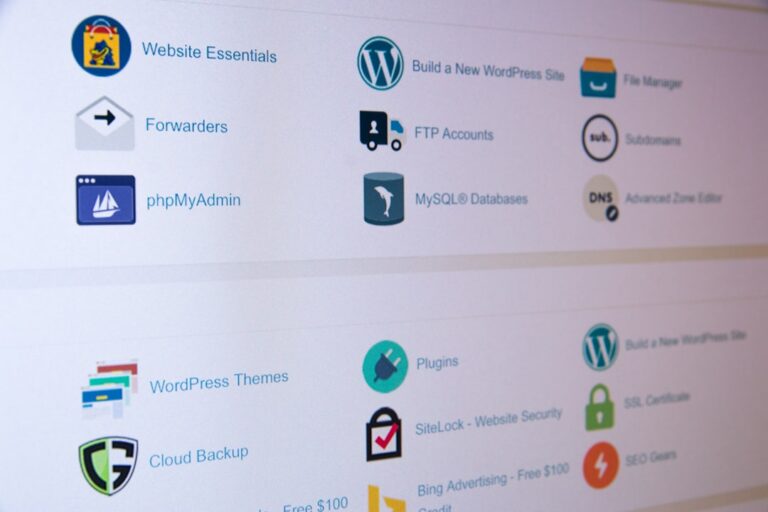
Here’s where it gets interesting. If you’re with one of the major Singapore providers — Exabytes, Vodien, Webvisions, or even some of the smaller boutique hosts — you’ve probably already noticed changes. Log into your dashboard and see if it still says “cPanel” in the corner. I bet it doesn’t.
Vodien went first, in 2023. They launched their own panel called “Vodien Control Panel.” It’s functional. It’s clean. It doesn’t have cPanel’s decade of bloat. Most of their shared hosting clients didn’t even notice the switch — they just saw a slightly different interface one day and moved on.
Exabytes did something similar. They started offering DirectAdmin as an alternative. DirectAdmin has been around forever — it’s the scrappy underdog that never got cPanel’s market share but also never got cPanel’s entitlement.
Webvisions, the quiet giant of Singapore hosting, went all-in on CyberPanel. They told me at a trade show that they’d migrated 15,000 accounts in six months. The guy running the booth — name tag said “Ravi” — looked exhausted but proud. “The first week was hell,” he admitted. “But after that? Smoother than I expected.”
And then there’s the open-source crowd. I know a guy — runs a hosting co-op out of his HDB flat in Bedok — who switched everything to aaPanel in 2024. He’s now hosting 200 sites for a fraction of what he paid before. “My clients don’t care what panel I use,” he told me. “They care if their site loads fast and doesn’t go down.”
He’s not wrong.
The Problem Nobody Talks About
But here’s the thing nobody mentions when they say “just switch panels.” Not all panels are created equal. And the migration process? It’s not a weekend project.
I learned this the hard way.
In February 2025, I decided to move my own side project — a small e-commerce site selling art prints — off cPanel. I was testing DirectAdmin. The process was supposed to be: export the cPanel backup, import it into DirectAdmin, update DNS. Simple.
Four hours later, I was staring at a 500 error and praying to any deity that would listen.
The problem was email. Specifically, email forwarders. cPanel stores them in a specific format. DirectAdmin uses a different one. My import script failed on the first forwarder and just… stopped. No partial migration. Nothing. My site was up, but half my email addresses were dead.
I lost about $200 in orders that weekend because customers couldn’t reach me. And I spent another $60 on emergency support from a freelancer on Upwork who specialized in DirectAdmin migrations. He fixed it in 20 minutes.
“You should have done a test migration first,” he told me. “Never do this on a live server.”
Yeah. Thanks, buddy. That’s $60 I’ll never see again.
The point is: migrating away from cPanel is doable, but you need to treat it like moving houses. You don’t just show up at the new place with all your stuff in a trash bag. You label boxes. You check what fits. You have a plan for the fragile stuff.
What’s Actually on the Menu in 2026
So what are you going to use instead of cPanel? Let me break down what I’ve actually seen work in Singapore’s hosting ecosystem.
DirectAdmin
This is the most common migration path I’ve seen. It’s stable, it’s affordable — licenses start around $6/month for a reseller account — and it feels familiar enough that most cPanel users can figure it out in a day. The interface is less polished, but it works. Several Singapore hosts now offer it as a standard option. If you’re a power user who actually logs into the control panel more than once a month, this is probably your best bet.
CyberPanel
This is the hot new thing, and for good reason. It runs on OpenLiteSpeed, which is fast — like, noticeably faster than Apache for most workloads. The interface is modern. It has built-in SSL management. But it’s still in rapid development. Version 2.3 came out while I was writing this, and it broke some plugins. If you like living on the edge, this is for you. If you want something that just works, maybe wait a year.
aaPanel
I honestly hadn’t heard of this until the Bedok guy mentioned it. It’s open-source, it’s Chinese-made, and it’s surprisingly good. The English documentation is spotty, but the panel itself is clean and fast. I tested it on a $5/month VPS from Vultr, and it handled a WordPress site with reasonable traffic without breaking a sweat. The downside: security updates are inconsistent. You need to be comfortable with command-line maintenance.
In-House Panels
Vodien’s built their own. Exabytes has something in the works. I’ve heard whispers that SingTel’s hosting arm is developing one too. These will probably be the most polished experiences because they’re tailored to each host’s infrastructure. But you’re also locked in. Moving away from one proprietary panel to another proprietary panel doesn’t solve the fundamental problem.
The Real Cost of Sticking with cPanel
Let me give you some hard numbers. I called around to five Singapore hosts last week — pretended I was a new customer with a small reseller account. Here’s what they quoted for cPanel vs. their alternatives:
Host A: cPanel reseller — $39.90/month. Their in-house panel — $24.90/month. That’s $15/month difference. Over a year? $180. Enough for a nice dinner.
Host B: cPanel shared hosting — $12.90/month. DirectAdmin equivalent — $7.90/month. Same plan, same disk space, same bandwidth. Just a different panel.
Host C: “We no longer offer cPanel to new customers.” Flat refusal. They’d only sell DirectAdmin or CyberPanel.
And this is 2025. By 2026, I expect more hosts to follow Host C’s lead. cPanel is becoming a premium product for enterprise clients who need compliance certifications or legacy compatibility. For everyone else? It’s being phased out, one renewal at a time.
The real cost isn’t just the monthly fee, though. It’s the hidden cost: the time you spend fixing things that break during migration, the opportunity cost of not moving to faster infrastructure, the headache of being stuck on an old version because your host won’t pay for the latest update.
I know a small design agency that lost a client because their cPanel-based site was running an outdated PHP version. The host wouldn’t upgrade because it would break another client’s custom app. That’s the kind of problem you inherit when you stay with a platform that’s become a legacy burden.
How to Actually Do This Without Losing Your Mind
If you’re reading this and thinking, “Okay, fine, I’ll migrate” — good. But do it right. Here’s what I wish I’d known before my own migration fiasco.
First, audit your setup. I mean really audit it. Go through every account, every email forwarder, every cron job, every database. Write it down. I used a Google Doc and spent an afternoon documenting everything. It was boring. It saved me three days of troubleshooting later.
Second, test on a staging server. Don’t just spin up a new hosting plan and point DNS at it. Get a cheap VPS — I used a $10/month DigitalOcean droplet — and do a dry run. Migrate one account. Test email, test the database, test the file permissions. Fix the things that break. Then do it for real.
Third, plan your DNS cutover. This is the part that trips everyone up. DNS propagation takes time. You want to minimize the window where some visitors see the old site and some see the new one. I learned to set the TTL on your DNS records to 300 seconds (five minutes) a week before the migration. That way, when you flip the switch, the change propagates quickly. Most people forget this. Don’t be most people.
Fourth, have a rollback plan. I didn’t. I assumed everything would work. When it didn’t, I spent a panicked afternoon restoring backups. Have the old server ready to go for at least 48 hours after the migration. If something breaks, you can flip DNS back and figure it out later.
Fifth, tell your clients. If you’re a reseller or an agency, your clients need to know. Not the technical details — they don’t care about control panels — but they’ll notice if email goes down for an hour. Send a simple email: “We’re upgrading our infrastructure. There may be brief downtime. Your site will be faster afterward.” Most people appreciate the heads-up.
Satay at East Coast Park
A few months after my migration disaster, I met Wei Liang again, the guy from the Tanjong Pagar meetup. We were both at a barbecue at East Coast Park, the one near the seafood center. He was flipping satay on a portable grill. I told him about my $60 freelancer and the lost orders.
He laughed. “Told you. It’s a pain at first.” He flipped a stick of chicken. “But now? I don’t even think about it anymore. My costs are lower. My clients are happier. I sleep better at night knowing I’m not paying for a panel that’s basically a tax on being lazy.”
I asked him if he’d ever go back to cPanel.
“Not unless someone pays me,” he said. “And even then, I’d think about it.”
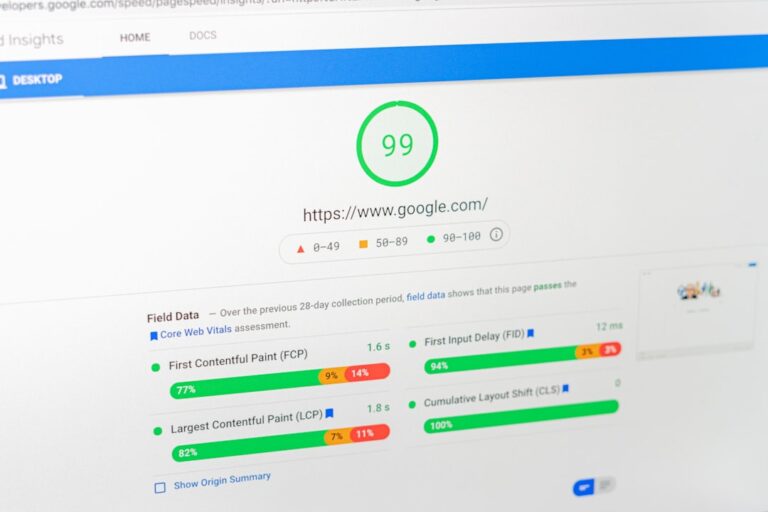
The sun was setting over the water. Tourists were taking photos of the skyline. I looked at my phone — checked a site I’d migrated to DirectAdmin a week earlier. Loaded in 1.2 seconds. That’s faster than it ever was with cPanel.
📷 Photos: CHUTTERSNAP (Unsplash), Aditya Chinchure (Unsplash)